



In their instant-classic blockbuster economic work “The Safe Assets Shortage Conundrum,” Ricardo Caballero, Emmanuel Farhi, and Pierre-Olivier Gourinchas define a safe asset as
a simple debt instrument expected to preserve its value in an adverse systemic event.
For more than 80 years, U.S. Treasury bonds have been the safe asset par excellence — nothing else has compared to the full faith and credit of the United States government. But a recent column in the Wall Street Journal by Greg Ip calls into question the Treasury market’s claim to the ultimate safe asset title. Treasuries, he notes, no longer trade like a structurally scarce asset with a price-insensitive bid behind it. He cites new work from Caballero and Stanford’s Hanno Lustig showing that the old safety pricing for Treasuries has eroded.
Treasury bonds used to yield less than swaps or AAA-rated corporate bonds even after adjusting for default risk — both of those deltas have flipped or vanished since the pandemic. Caballero estimates that roughly 75 basis points of the rise in Treasury yields since 2015 reflects what he calls an “absorption premium.” For decades, investors accepted below-market yields on Treasuries in exchange for their safety and liquidity. However, dealers and investors now demand extra yield to buy the supply. Ip goes on to note that in addition to these new pricing dynamics, Treasuries have fallen alongside stocks in recent stress episodes, as they did after Liberation Day. So much for a flight to safety.
It’s hard to argue with any of this. The market has clearly repriced the risk of holding U.S. Treasuries for a long time (i.e. duration risk). But I am not convinced that repricing duration (stemming from stagflationary risks and continual fiscal expansion) and the fading of safe haven status are exactly the same thing. At least not yet.
Maybe this time is different. Maybe.
The safety of an asset, as Caballero, Farhi, and Gourinchas note, is in relation to other assets and to what other investors treat as safe. We are grappling with a kind of perma-shock: a war with Iran, an oil shock, stubborn inflation, and a capex boom all at once. So perhaps our view of safe haven assets needs to reflect the reality of the situation. A few observations.
No bond is safe in stagflation
Against the backdrop of elevated inflation, softening but not collapsing economic growth, and the ongoing supply shock from the conflict in Iran, why would we expect bonds to rally? Long-dated bonds — even safe haven assets like Treasuries — are going to underperform in this mix of high prices and tepid growth. A 147-year study conducted by Guido Baltussen of Erasmus University finds that real government bond returns are negative in high-inflation regimes and worst in stagflation. Moreover, this manifestation of stagflation is strange because the AI buildout has kept the stock market at a record high. So even though things feel stagflation-y, everyone is watching their 401(k)s grow, which could suppress the appetite for regular fixed income.
Buyers have some alternatives but haven’t disappeared
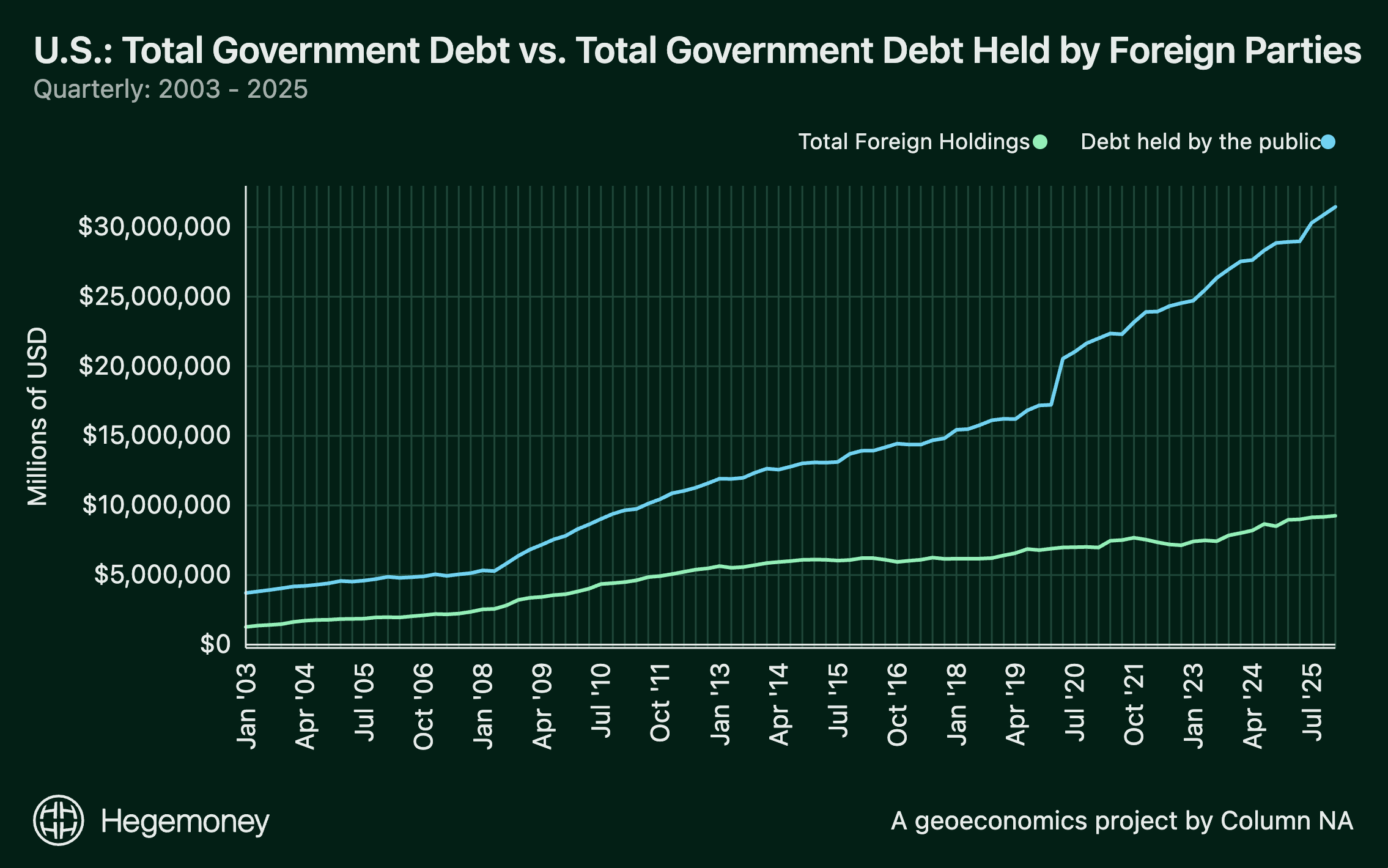
Treasuries are competing for the same savings pool as a record corporate investment-grade borrowing boom. According to Barclays research, corporations are on track to issue roughly $1.9 trillion in investment-grade debt this year, much of it financing the AI data center buildout. For scale, Treasury’s privately held net marketable borrowing is expected to be about $2 trillion this fiscal year. That means gross investment-grade supply is in the same neighborhood as Treasury’s net borrowing. Foreign investors now hold about 30% of publicly-held debt, down from roughly 50% in 2008 — but the level of foreign holdings has continued to grow, now hovering around $9.2 trillion. Foreign demand has not collapsed; it has just not kept pace with the supply of U.S. debt (see below).
We should note that foreign holdings rising in dollars is not the same as the foreign official share of total outstanding Treasuries, which has fallen — a bigger share of the book is now private and yield-sensitive, which is partly why duration is more expensive even if nothing has replaced Treasuries as the go-to safe asset.
Nowhere else to go
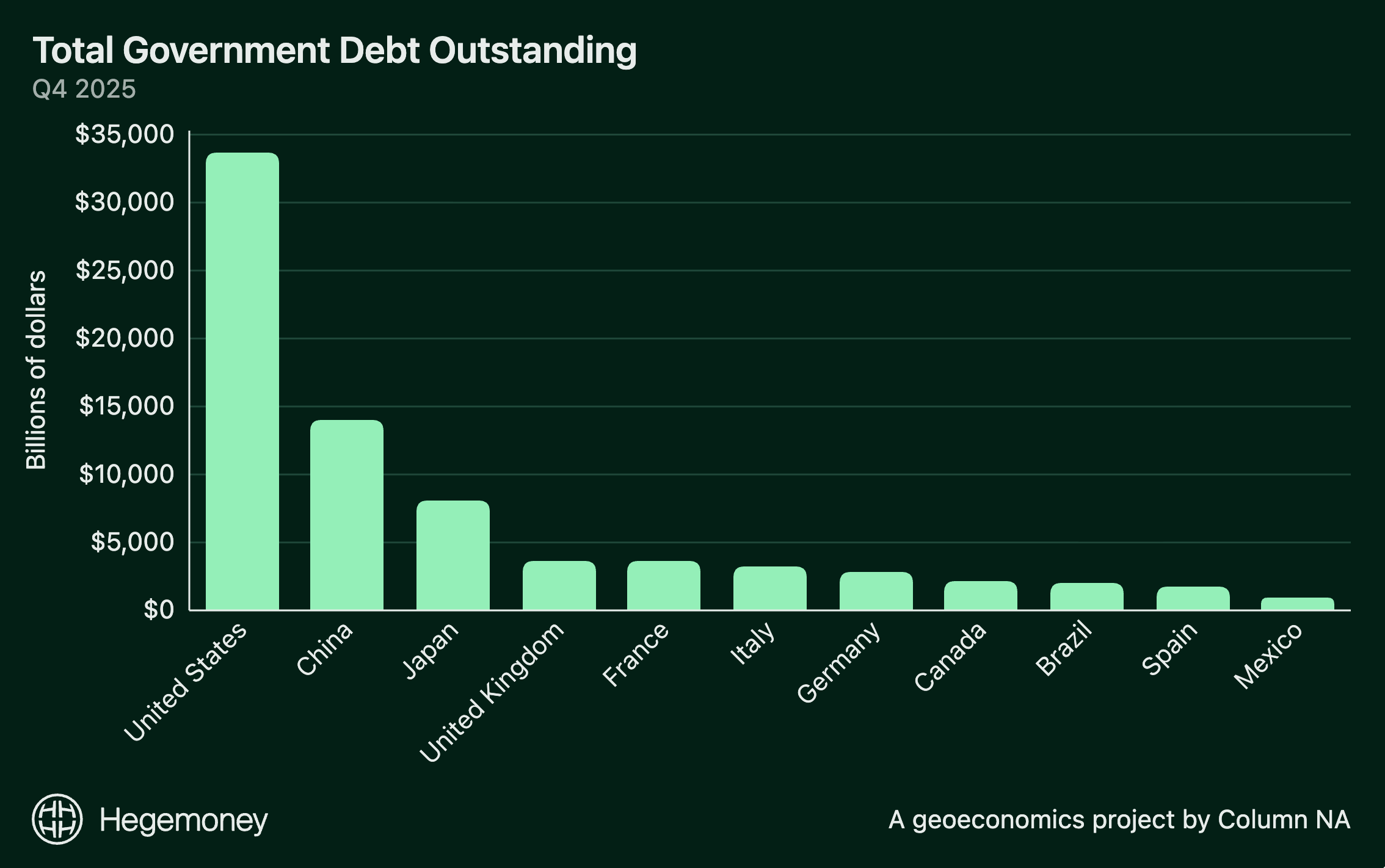
If there were a true global crisis (God forbid), only one market is large enough to sustain extremely high levels of demand for safe assets: the United States. As of Q4 2025, the total government debt securities outstanding were $33.6 trillion in the U.S., according to data from the Bank for International Settlements. The next largest market is China at slightly under $15 trillion. Euro-based debt starts to add up until you remember that it is not fungible because the Europeans still haven’t figured out a fiscal union! Corporate debt is still somewhat risky on the credit side, and it is not a $30 trillion market. Gold and crypto have absorbed some diversification. Treasuries may have 99 problems — Lustig catalogs intermediation issues, including primary dealers doing less shock absorption and hedge funds absorbing more of the flow — but market size isn’t one.
Capex over everything
Safe haven status for U.S. Treasuries hasn’t actually been tested. Yes, we are fighting a war, but it hasn’t pulled the rug out from under the economy. Stocks are near record highs. The Iran conflict has not triggered a dislocative event where liquidity is needed and credit lines are getting called in. My buddy Dan, who is frequently wrong but sometimes extremely right, points out that we are just one hyperscaler capex cut away from a really serious economic problem. If the AI borrowing boom stumbles, then credit reprices and the money has to run somewhere. I would bet that it runs to the asset that everyone has been busy crucifying for the last year: Treasuries.
The economy looks a bit unconventional at the moment. It is the market’s job to tell policymakers when it is uncomfortable with policy (which is why we hear so much about the dreaded bond vigilantes). Greg Ip is right that announcing a buyback just two weeks after the quarterly refunding does indeed break with decades of regular-and-predictable debt management, and more similar departures from form will risk increasing volatility at the back end of the curve. That is a reason to demand more yield and to be cautious, not a reason to call the world’s largest government bond market junk.
If China suddenly opens its bond markets, or the Eurozone decides now is the time for federated debt, I might be more nervous. But for now, the safe asset par excellence has been repriced and not yet replaced.